Welcome to the ultimate GrammarFlip library of free printable grammar worksheets, diagnostic activities, and core ELA resources. Designed for elementary school, middle school, and high school English Language Arts teachers, our comprehensive collection covers everything from core parts of speech (nouns, verbs, conjunctions) to advanced mechanics, sentence structure, and punctuation rules.
Browse all 86 grammar topics below to access online lesson pages, download ready-to-print practice worksheets, and find engaging activities built for classroom instruction, bellringers, or targeted review. Select any topic to jump directly to the lesson material.
Parts of Speech
Common Nouns
A common noun is a grammatical part of speech that refers to a person, place, thing, or idea.

Proper Nouns
A proper noun is a grammatical part of speech that refers to a specific person, place, or thing.

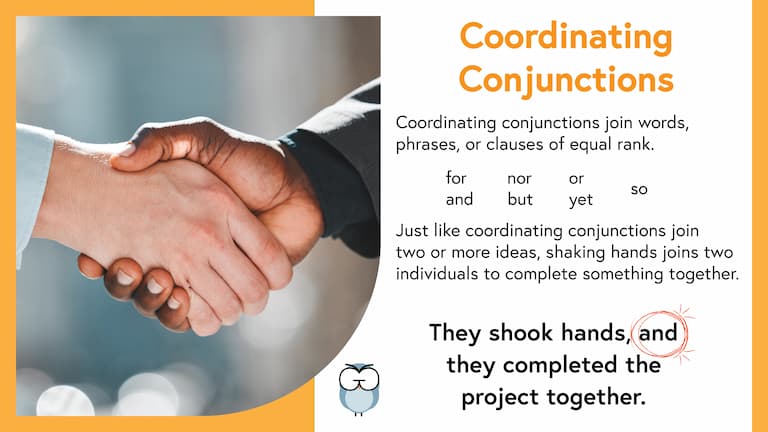
Coordinating Conjunctions
A coordinating conjunction joins words, phrases, or clauses of equal rank.
Correlative Conjunctions
Correlative conjunctions work in pairs to join words, phrases, or clauses of equal rank.

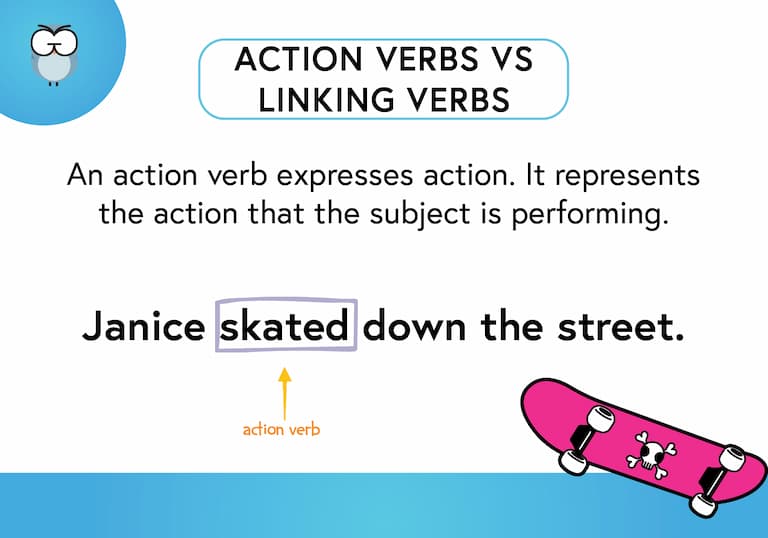
Action Verbs
An action verb expresses action. It represents the action that the subject is performing.
Verb Phrases
Action verb phrases and linking verb phrases both consist of a set of helping verbs and a main verb.

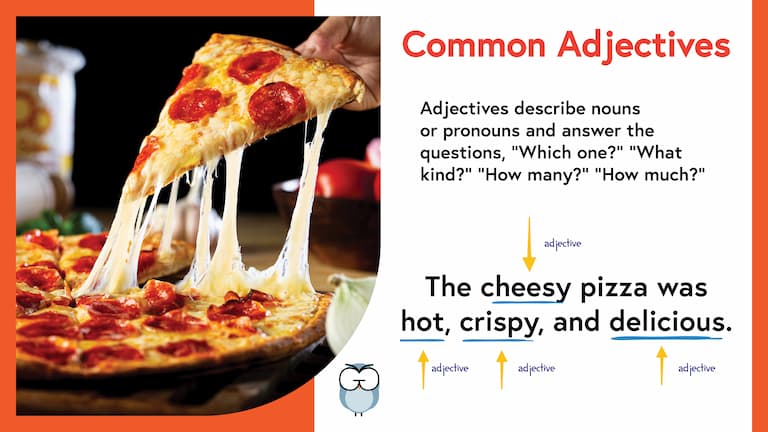
Common Adjectives
A common adjective is a grammatical part of speech that describes a noun (a person, place, thing, or idea).
Personal Pronouns and Antecedents
A personal pronoun is a word that takes the place of a defined person or thing. The antecedent is the defined person or thing to which the pronoun is being referred.

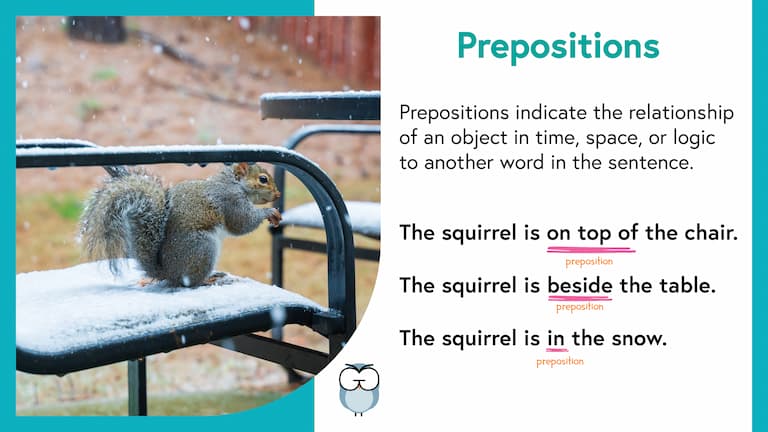
Prepositions
A preposition is a word that indicates the relationship of an object in time, space, or logic to another word(s) in the sentence.
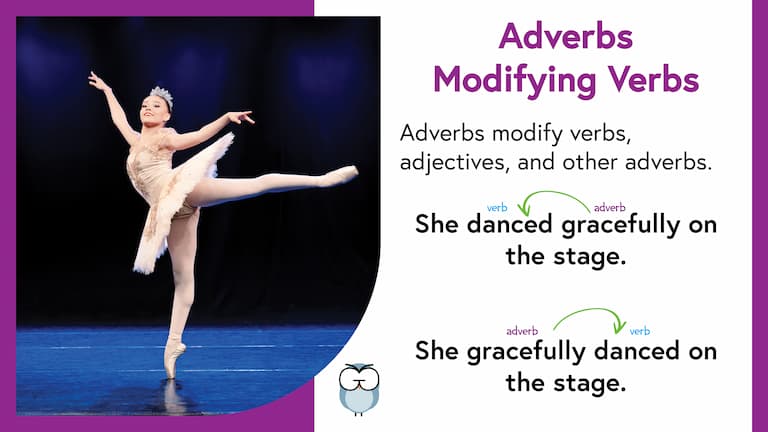
Adverbs Modifying Verbs
An adverb is a part of speech that modifies a verb, an adjective, or another adverb. When modifying verbs, adverbs answer questions about where, when, how, and to what extent an action took place.
Adverbs Modifying Adjectives
An adverb is a part of speech that modifies a verb, an adjective, or another adverb. When modifying an adjective, an adverb can answer questions regarding the extent to which an adjective describes a noun.

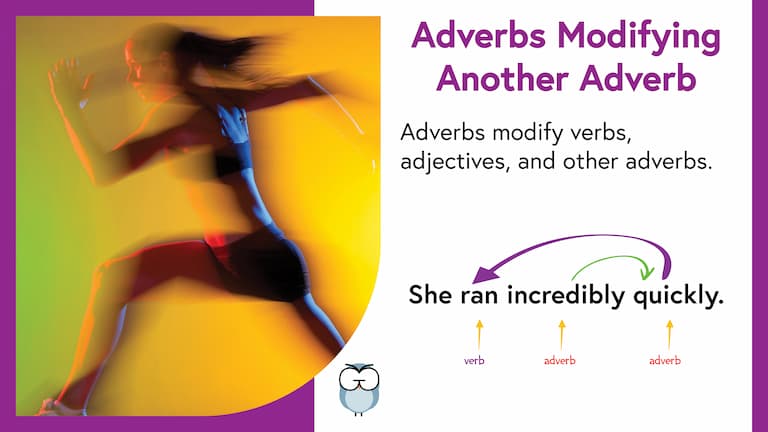
Adverbs Modifying Other Adverbs
An adverb is a part of speech that modifies a verb, an adjective, and another adverb. When an adverb modifies another adverb, an adverb can answer questions regarding the extent to which that adverb modifies the other adverb.
Linking Verbs
A linking verb expresses a state of being by linking the subject of the sentence to another word in the predicate that provides additional information about the subject.

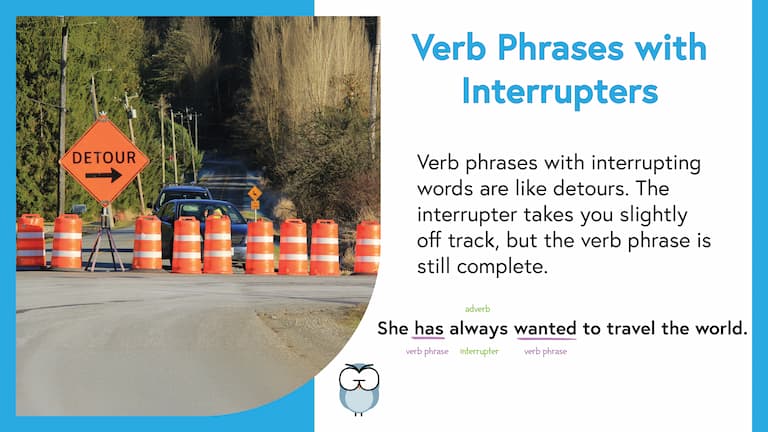
Verb Phrases with Interrupters
A verb phrase can be interrupted by an adverb that describes the state of the verb without being part of the verb or verb phrase.
Transitive Verbs
A transitive verb is a type of verb that transfers action to a noun or pronoun.

Intransitive Verbs
An intransitive verb does not transfer action to a noun or pronoun, and it can end a sentence.

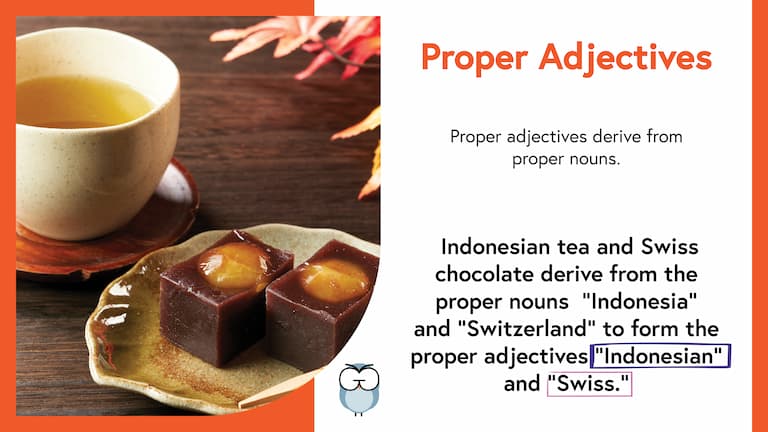
Proper Adjectives
A proper adjective is a grammatical part of speech that derives itself from a proper noun.
Nouns Functioning as Adjectives
Nouns functioning as adjectives are noun forms of words that take on the function of an adjective.

Demonstrative Adjectives
A demonstrative adjective occurs when “this,” “that,” “these,” or “those” comes before a noun.

Demonstrative Pronouns
A demonstrative adjective occurs when “this,” “that,” “these,” or “those” takes the place of a noun.

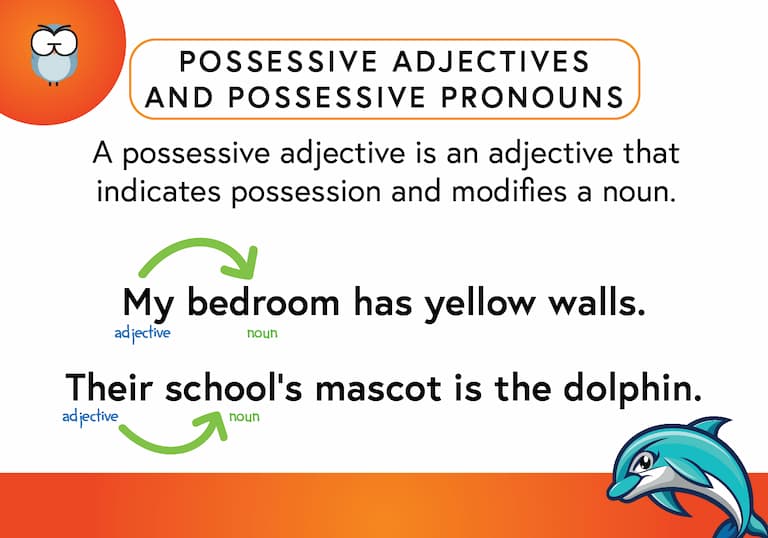
Possessive Adjectives
A possessive adjective is an adjective that indicates possession and precedes a noun.
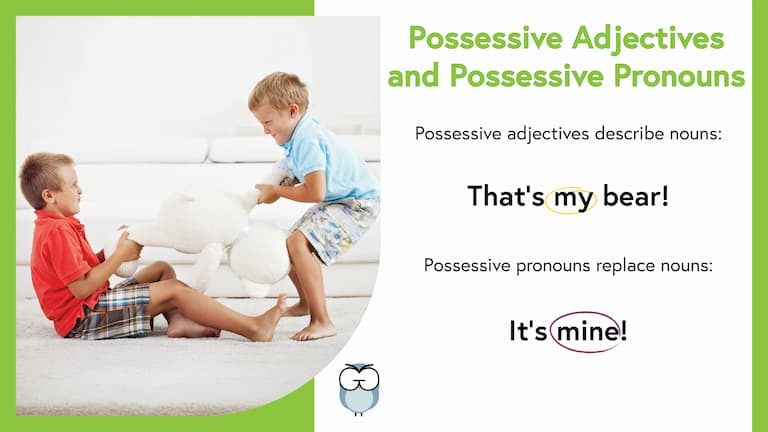
Possessive Pronouns
A possessive pronoun is a pronoun that indicates possession and replaces a noun.
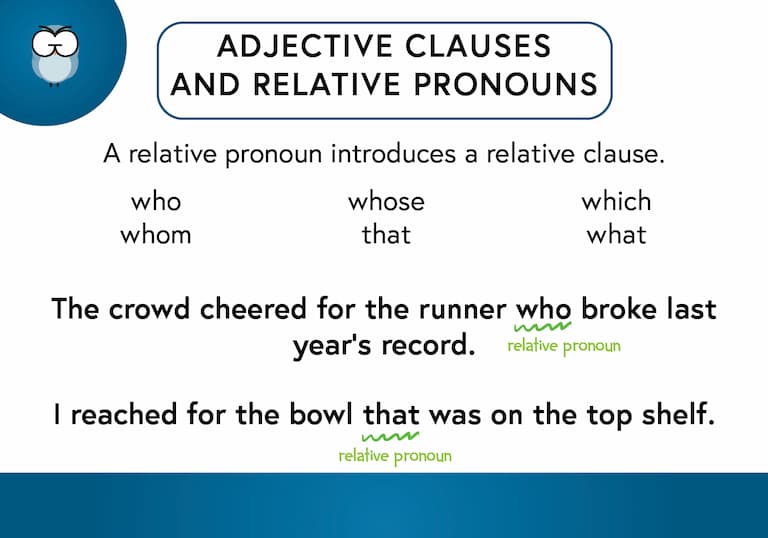
Relative Pronouns
A relative pronoun is a type of pronoun that introduces a relative clause: who, whom, whose, that, which, what.
Relative Adverbs
A relative adverb is a type of subordinating conjunction that introduces an adverb clause or an adjective clause.
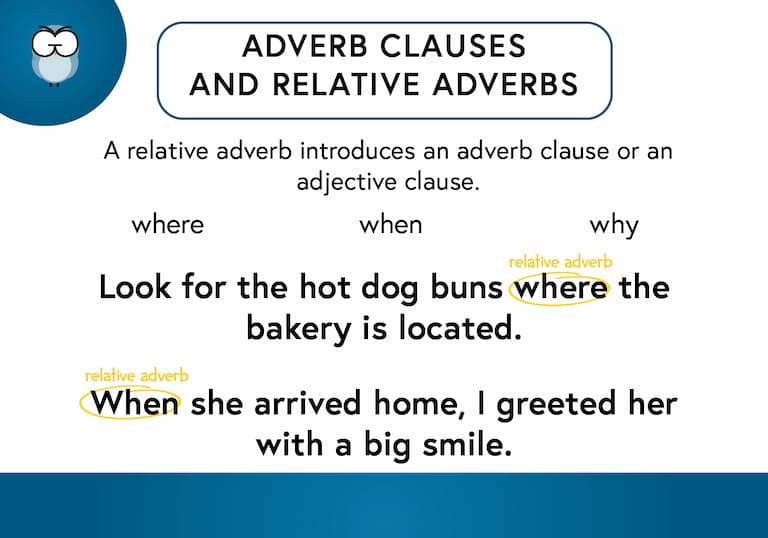
Nominative Case Pronouns
Nominative case pronouns are pronouns that are only used as subjects or as predicate pronouns.
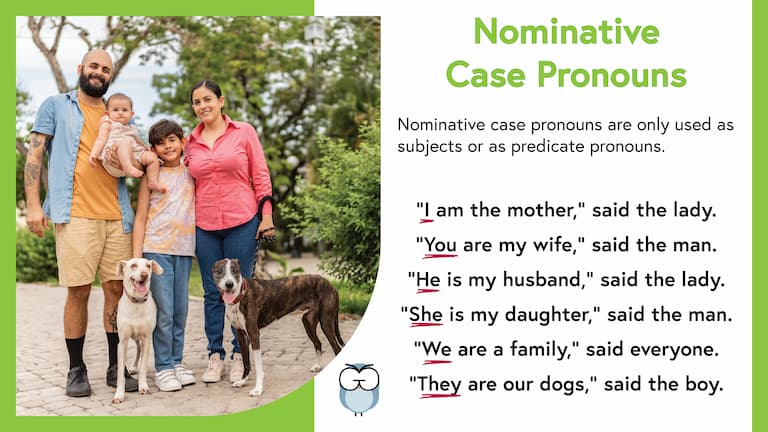
Objective Case Pronouns
An objective case pronoun is a pronoun being used as a direct object, an indirect object, or an object of a preposition.
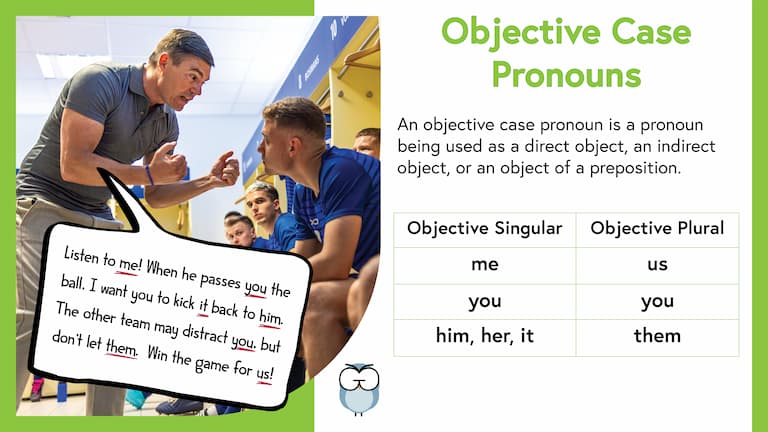
Possessive Case Pronouns
A possessive case pronoun replaces a noun and shows possession of an object.
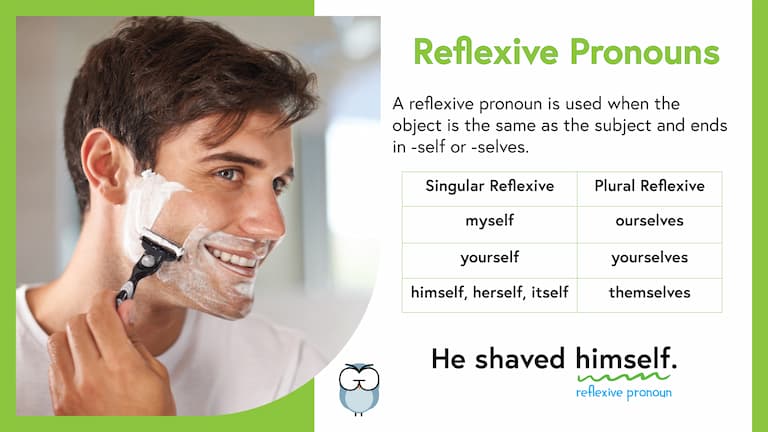
Reflexive Pronouns
A reflexive pronoun is used when the object is the same as the subject in a sentence and ends in -self or -selves.
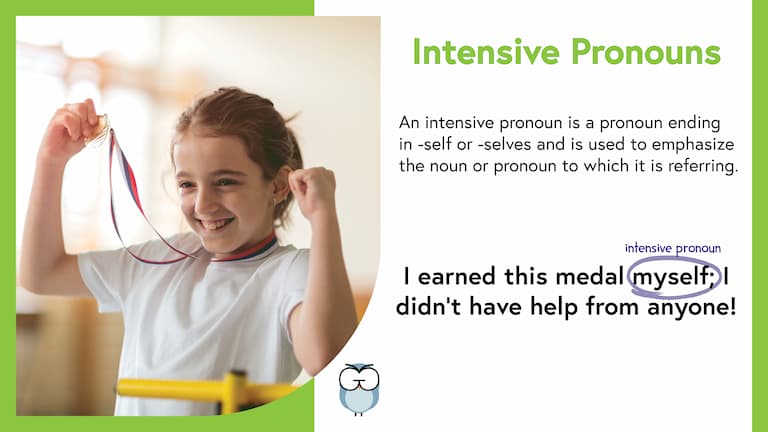
Intensive Pronouns
An intensive pronoun is a pronoun ending in -self or -selves and is used to emphasize the noun or pronoun to which it is referring.
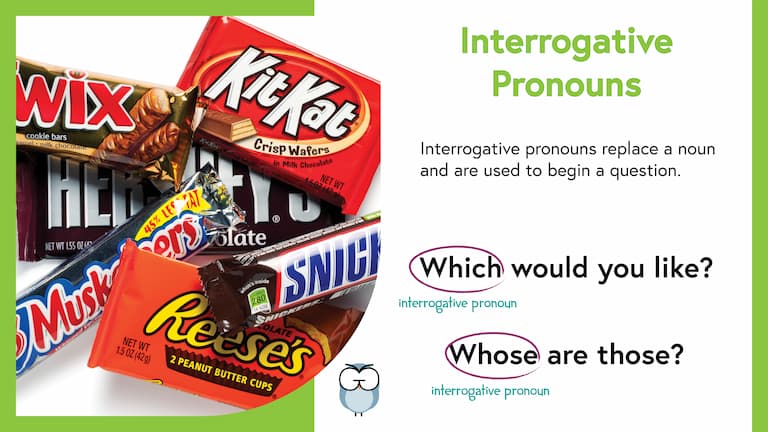
Interrogative Pronouns
An interrogative pronoun replaces a noun and is used to begin a question. Interrogative pronouns include what, which, who, whom, and whose.
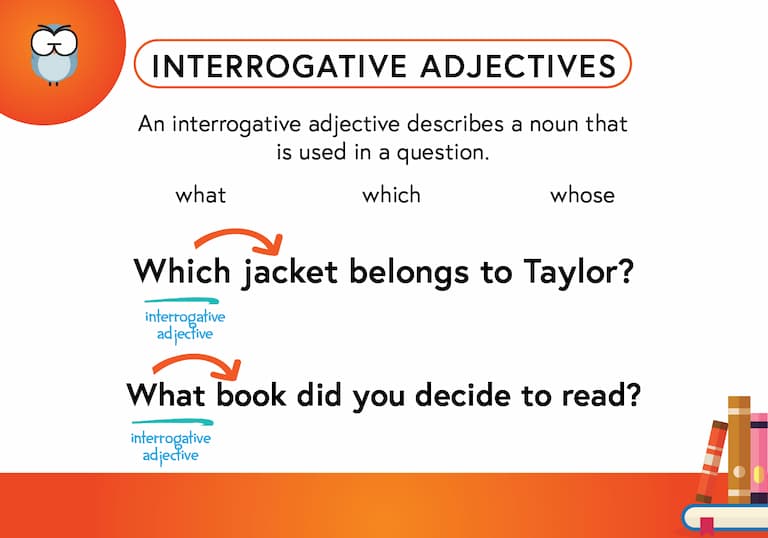
Interrogative Adjectives
An interrogative adjective describes a noun that is used in a question.
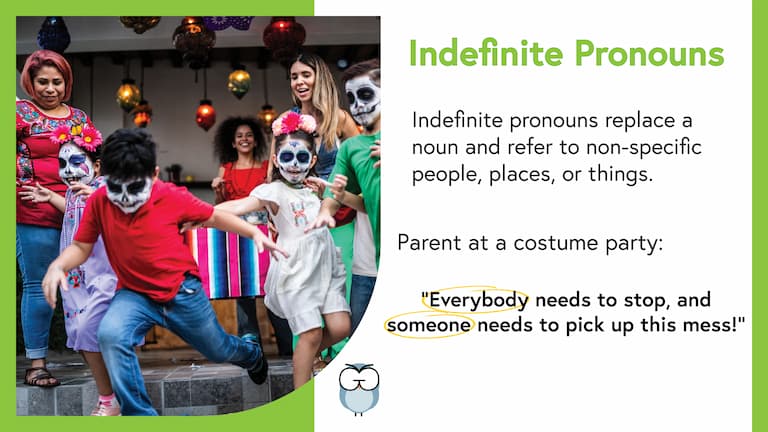
Indefinite Pronouns
An indefinite pronoun replaces a noun and refers to non-specific people, places, or things.
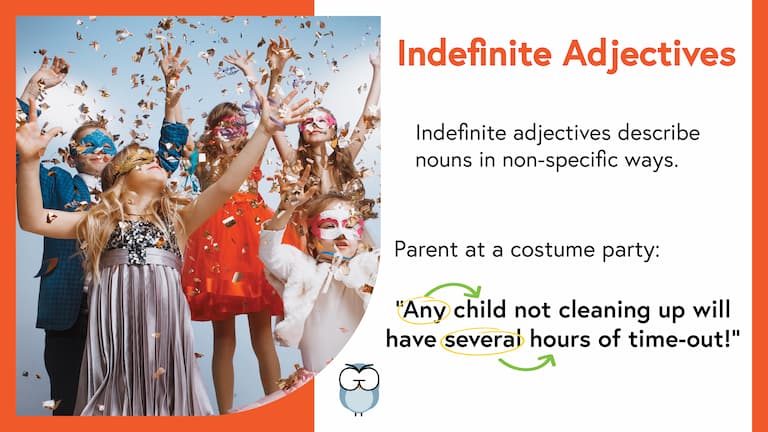
Indefinite Adjectives
Indefinite adjectives are types of adjectives that describe nouns in non-specific ways.
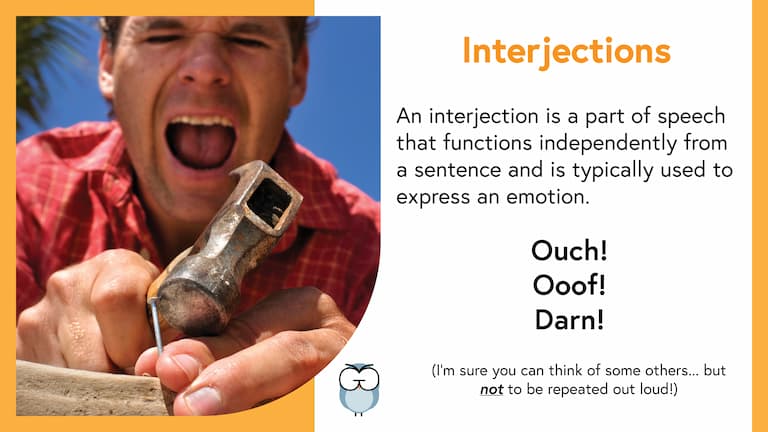
Interjections
An interjection is a part of speech that functions independently from a sentence and is typically used to express an emotion.
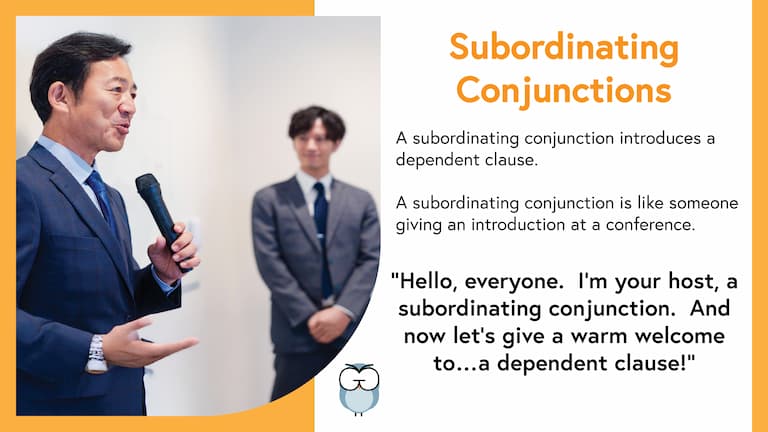
Subordinating Conjunctions
A subordinating conjunction is a connecting word that introduces a dependent clause.
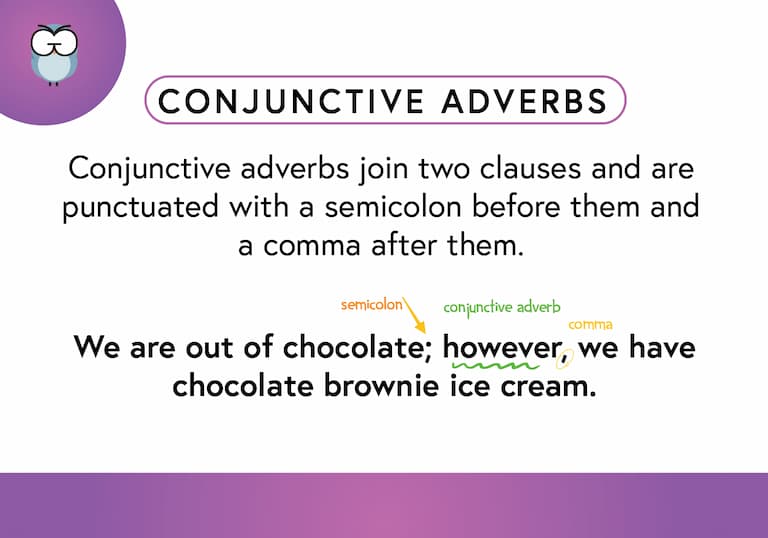
Conjunctive Adverbs
A conjunctive adverb is an adverb that joins two clauses. It is punctuated with a semicolon before it and a comma after it.
Parts of the Sentence
Compound Subjects
A compound subject occurs when two or more subjects exist in a single sentence and share the same verb.

Simple and Complete Subjects
The simple subject is a single word representing the subject without any of its modifiers or adjectives whereas a complete subject represents the subject along with all of its modifiers or adjectives.

The Understood You
The Understood You occurs in imperative sentences where a command is being given such that the subject of the sentence is implied (or understood) to be the pronoun “you.”

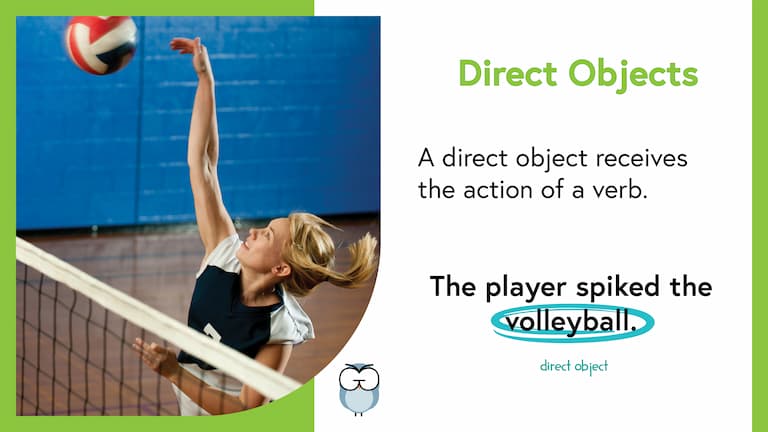
Direct Objects
A direct object is a noun or pronoun that receives the action of a verb (and can never be inside a prepositional phrase).
Hard-to-Find Subjects in Questions
In interrogative sentences, the subject is usually not followed by a verb. To find the subject, rearrange the question into a declarative statement, and then look for your subject.

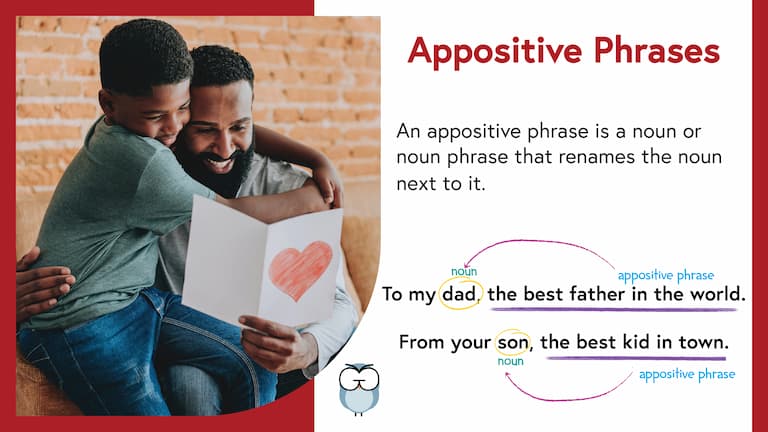
Appositive Phrases
An appositive phrase is a noun, noun phrase, or series of nouns that renames the noun next to it.
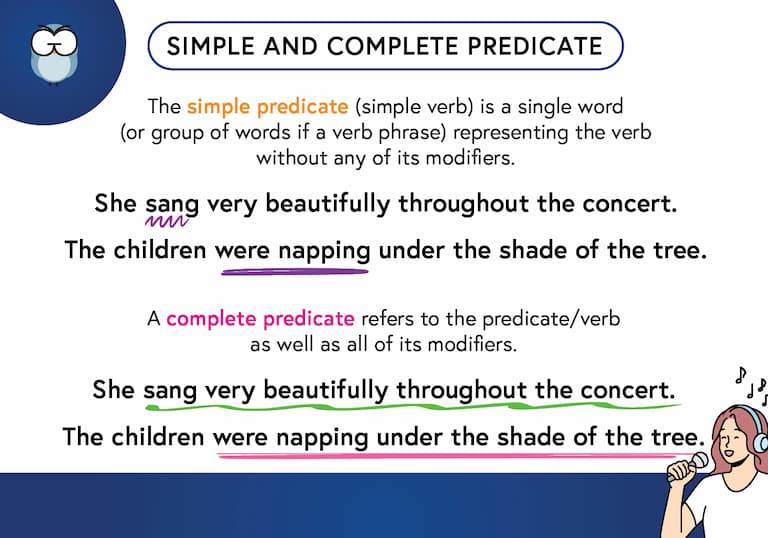
Simple and Complete Predicates
The simple predicate is a single word representing the verb without any of its modifiers whereas a complete predicate refers to the predicate/verb as well as all of its modifiers.
Compound Predicates
A compound predicate/verb occurs when two or more verbs appear in a single sentence and share the same subject.

Compound Subjects Using “Or”
When a compound subject consists of two or more subjects and is joined by the conjunction “or,” the subject that is closest to the verb determines whether the verb is singular or plural.

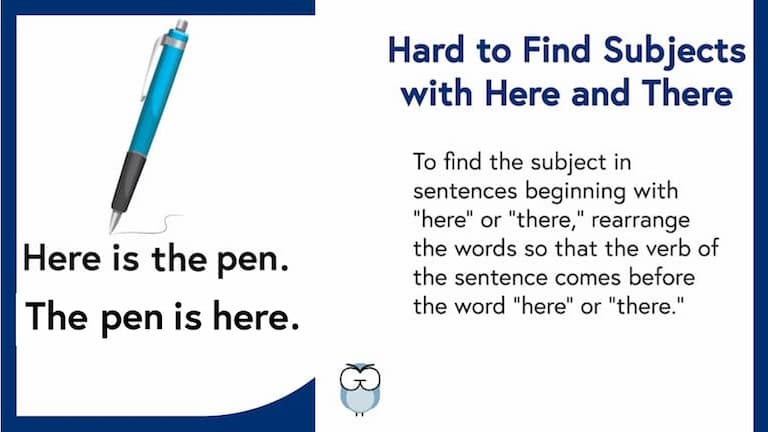
Hard-to-Find Subjects (Here/There)
To find the subject of these sentences, simply rearrange the words so that the verb of the sentence comes before the word ‘here’ or ‘there.’
Objects of Prepositions
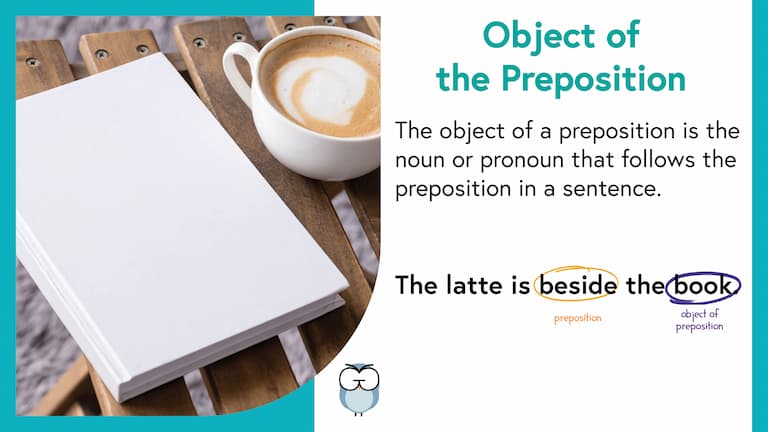
The object of a preposition is the noun or pronoun that follows the preposition in a sentence.
Prepositional Phrases
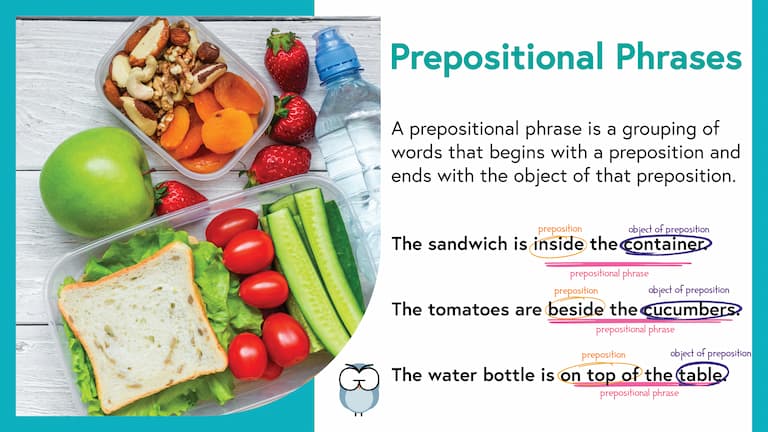
A prepositional phrase is a grouping of words that begins with a preposition and ends with the object of that preposition.
Prepositional Phrases as Adjectives
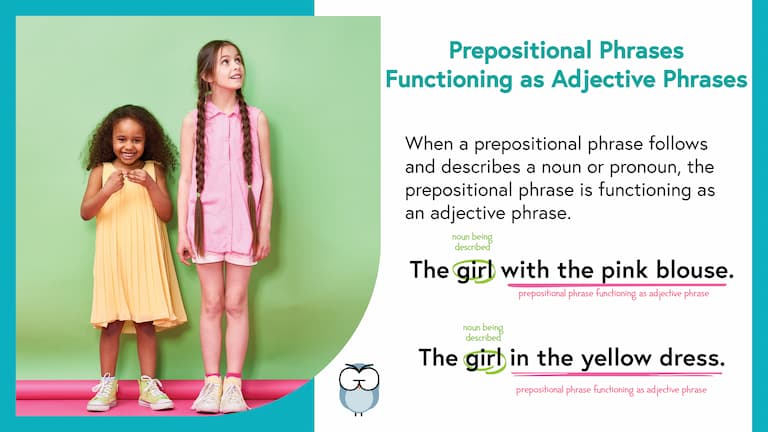
When a prepositional phrase follows and describes a noun or pronoun, the prepositional phrase is functioning as an adjective.
Prepositional Phrases as Adverbs
When a prepositional phrase describes a verb, an adjective, or an adverb, then the prepositional phrase is functioning as an adverb.
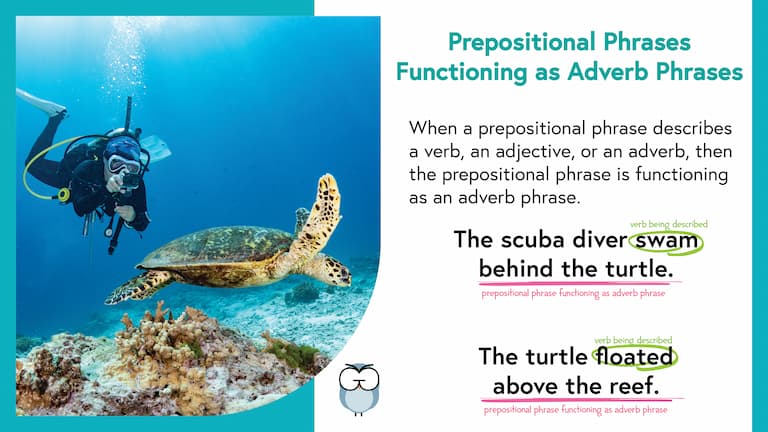
Indirect Obejcts
An indirect object is a noun or pronoun that names the recipient of the direct object and always appears after the verb but before the direct object.
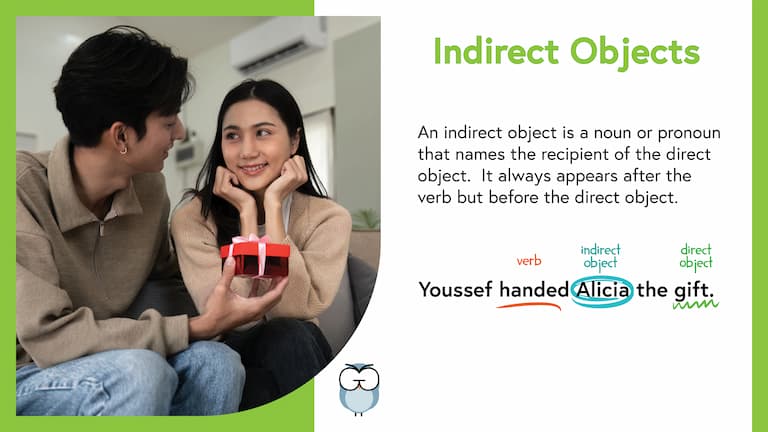
Objective Complements
An objective complement (or object complement) is a word or phrase that follows a direct object and describes or renames it.
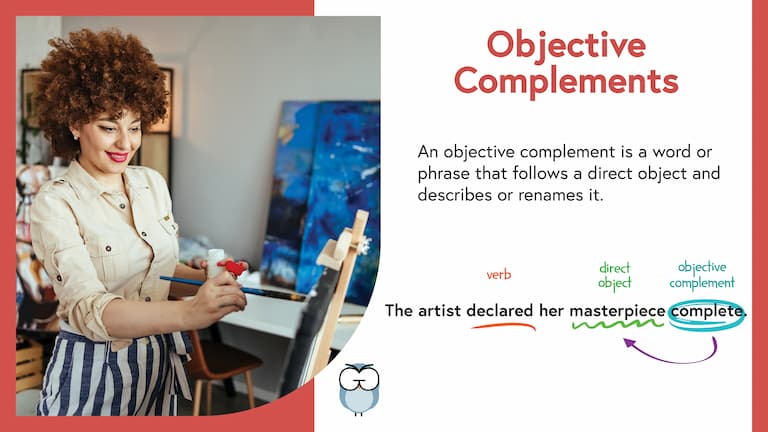
Subject Complements
A subject complement is a noun, adjective, or pronoun that follows a linking verb to describe or rename the subject.
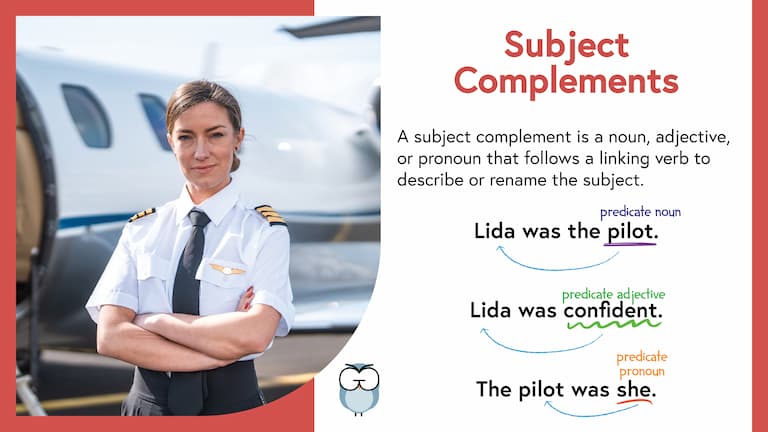
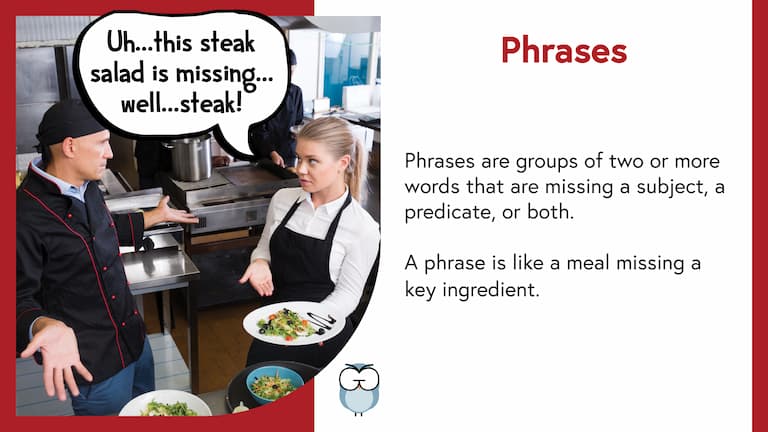
Phrases Defined
Phrases are groupings of two or more words that are missing a subject, a predicate, or both.
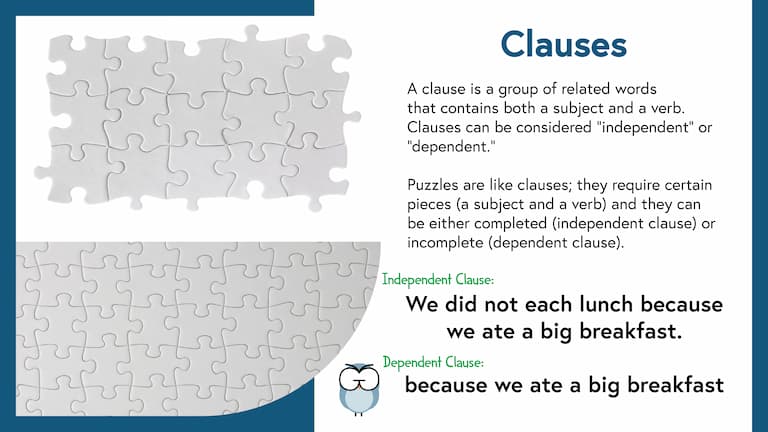
Clauses Defined
A clause is a group of related words that contains both a subject and a verb. Clauses can be considered “independent” or “dependent” (also known as subordinate clauses).
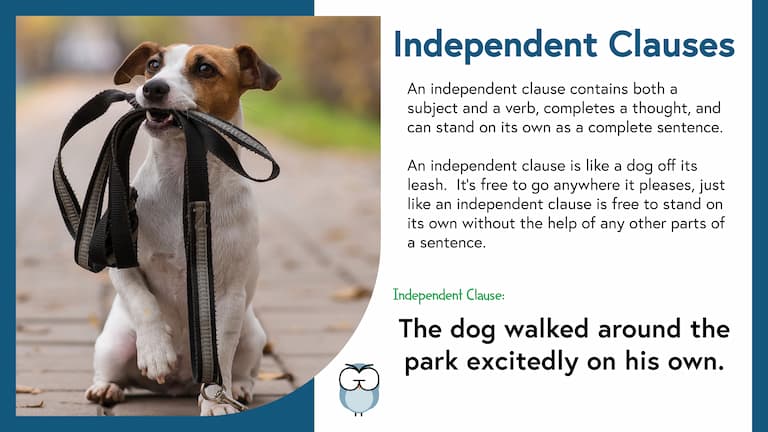
Independent Clauses
An independent clause contains both a subject and a verb, completes a thought, and must be able to stand on its own as a complete sentence.
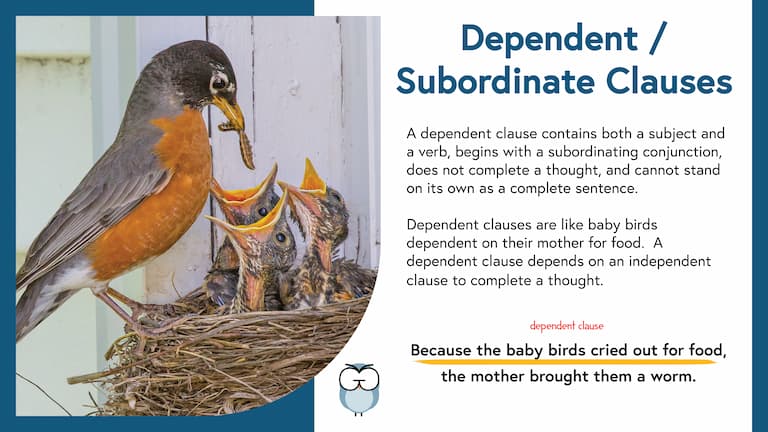
Dependent/Subordinate Clauses
A dependent or subordinate clause contains both a subject and a verb, begins with a subordinating conjunction, does not complete a thought, and cannot stand on its own as a complete sentence.
Simple Sentences
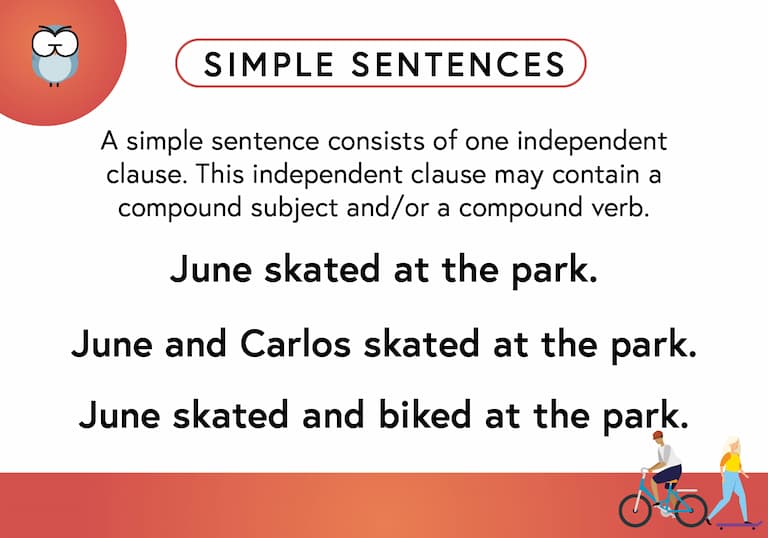
A simple sentence consists of one independent clause.
Compound Sentences
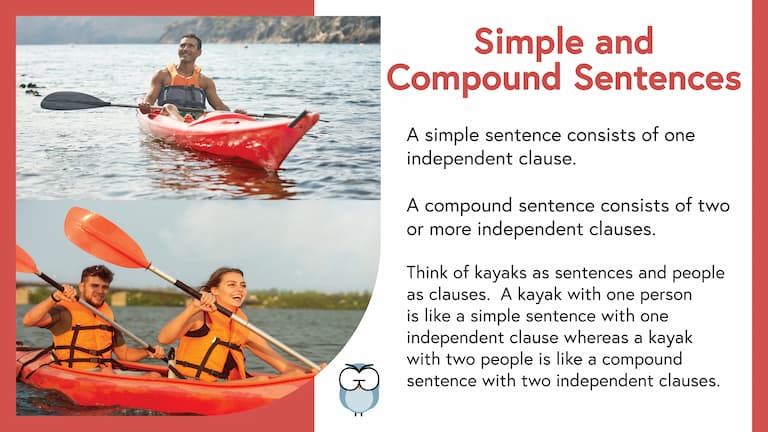
A compound sentence is a type of sentence that consists of two or more independent clauses.
Complex Sentences
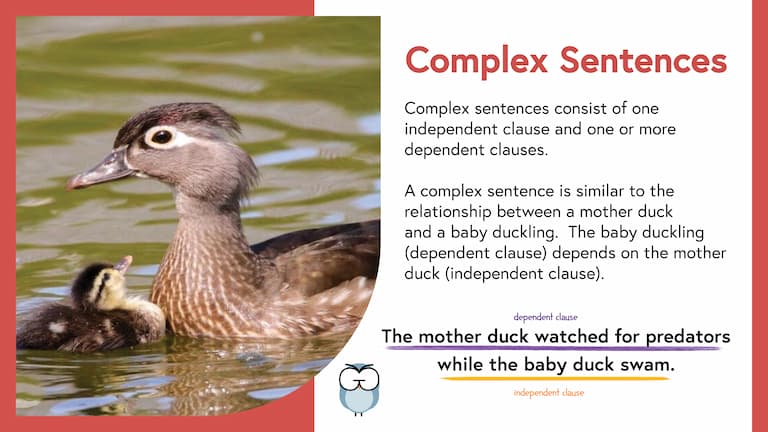
Complex sentences consist of one independent clause and one or more dependent clauses.
Compound-Complex Sentences
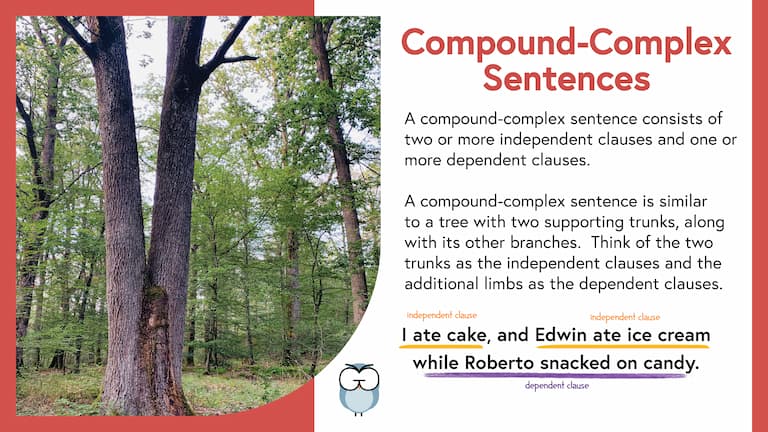
A compound-complex sentence is a type of sentence that consists of two or more independent clauses and one or more dependent clauses.
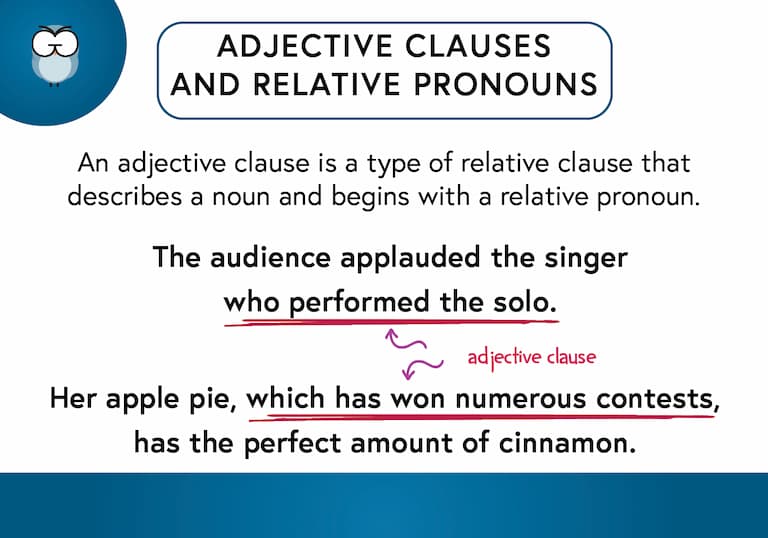
Adjective Clauses
An adjective clause is a type of relative clause that describes a noun and begins with a relative pronoun (who, whom, whose, that, which, what).
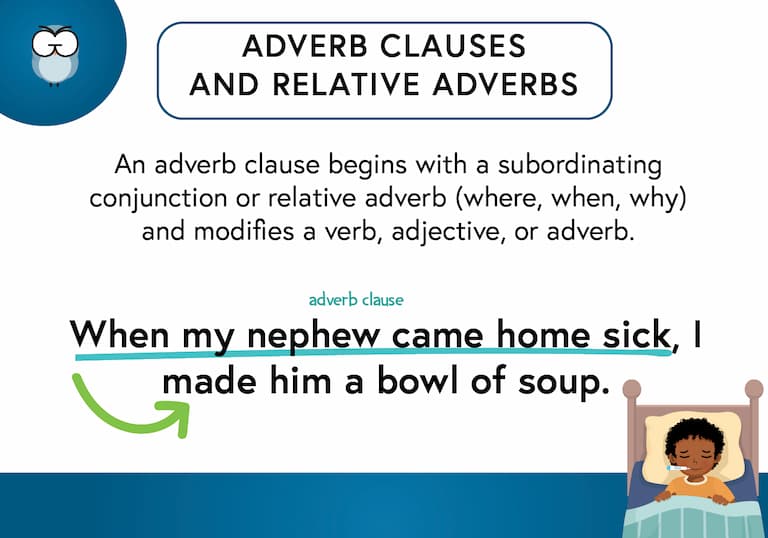
Adverb Clauses
An adverb clause is a type of relative clause that modifies a verb, adjective, or adverb, and it begins with a subordinating conjunction or relative adverb (where, when, or why).
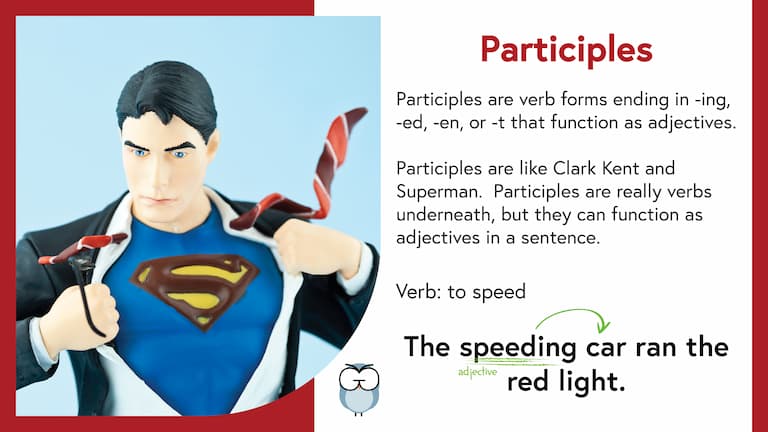
Participles and Participial Phrases
A participle is a form of a verb that functions as an adjective and typically ends in -ing, -ed, -en, or -t, and can stand alone or as part of a participial phrase.
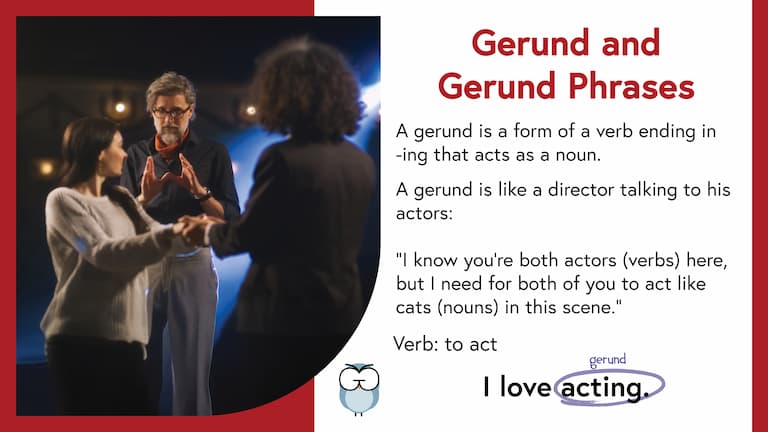
Gerunds and Gerund Phrases
A gerund is a form of a verb ending in -ing that acts as a noun.
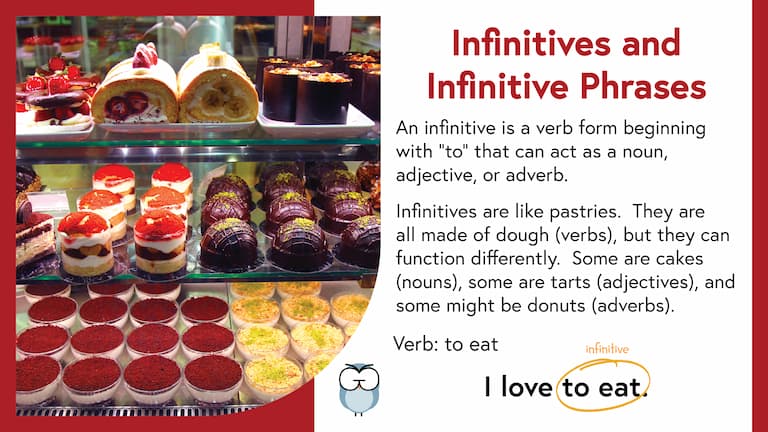
Infinitives and Infinitive Phrases
An infinitive is a verb form beginning with “to” that can act as a noun, adjective, or adverb.
Mechanics and Usage
Capitalization: Basic Rules
Among the many capitalization rules, the following ten are some of the basic capitalization rules you’ll come across when learning grammar and mechanics.

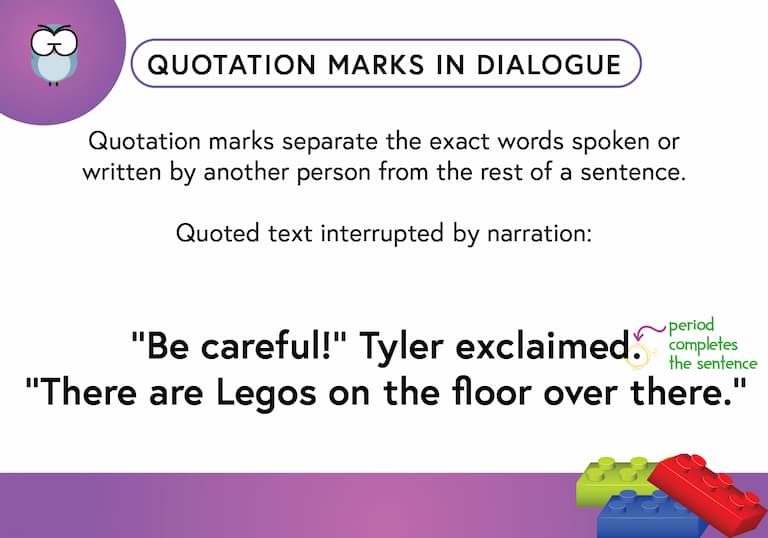
Quotation Marks in Dialogue
Quotation marks are punctuation marks that are used to separate the exact words spoken or written by another person from the rest of a sentence.
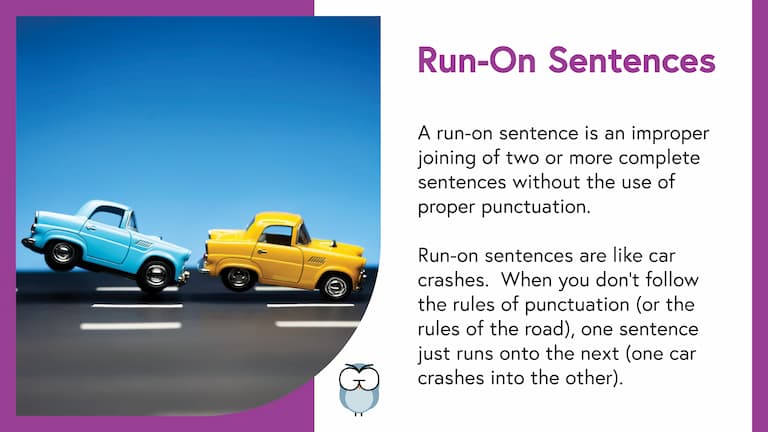
Run-on Sentences
A run-on sentence is an improper joining of two or more complete sentences (i.e. independent clauses) without the use of any proper punctuation.
Commas: Items in a Series
Commas should be used when three or more items in a series are listed.

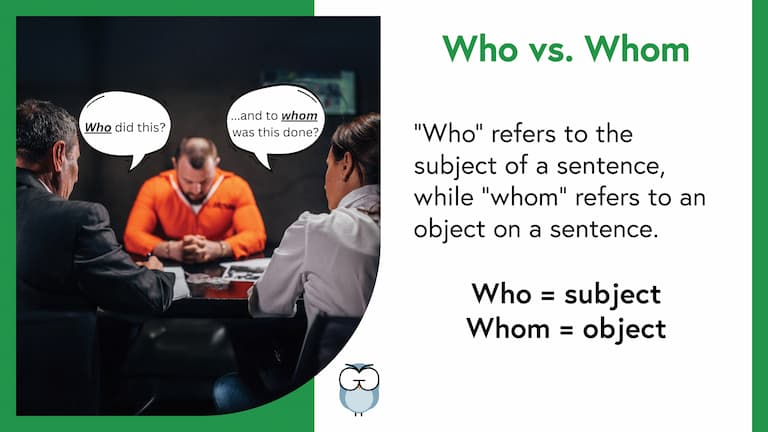
Who vs. Whom
Who and whom are commonly confused, but ‘who’ is used to refer to the subject of a sentence, while ‘whom’ is used to refer to an object.
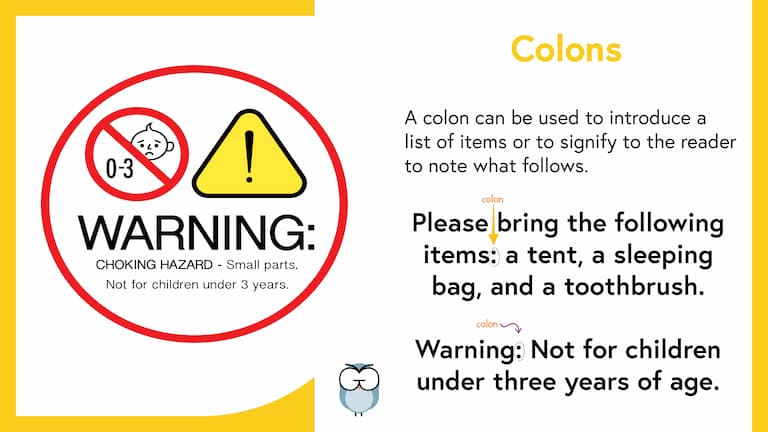
Colons
A colon is a punctuation mark that follows an independent clause and introduces a list of items.
Capitalization: Advanced Rules
Among the many capitalization rules, the following ten are some of the most common advanced capitalization rules you’ll come across when learning grammar and mechanics.

Active Voice vs. Passive Voice
In sentences using the active voice, the subject performs the action. In sentences using the passive voice, the subject is acted upon.

Hyphens
A hyphen is a type of punctuation used to join two or more words that work together to form a combined meaning.

Commas Between Two Adjectives
A comma should be placed between two adjectives (of equal rank) that describe the same noun.

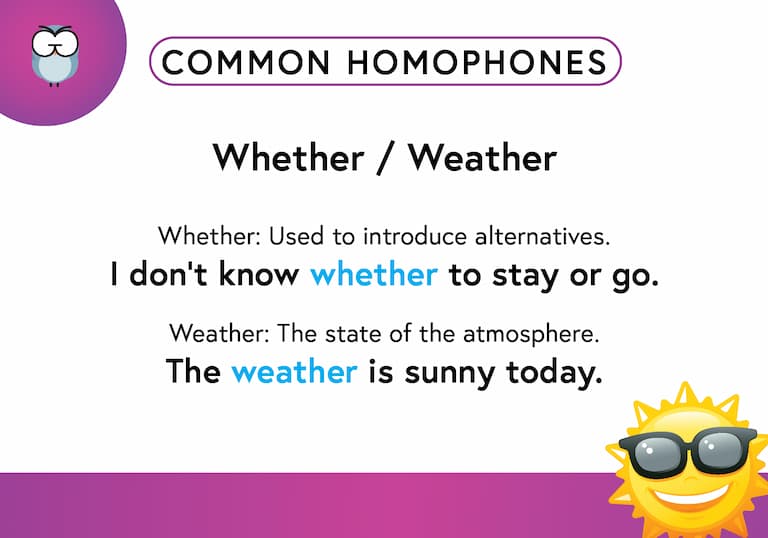
Common Homophones
Homophones are two or more words that sound the same but have different meanings and spellings.
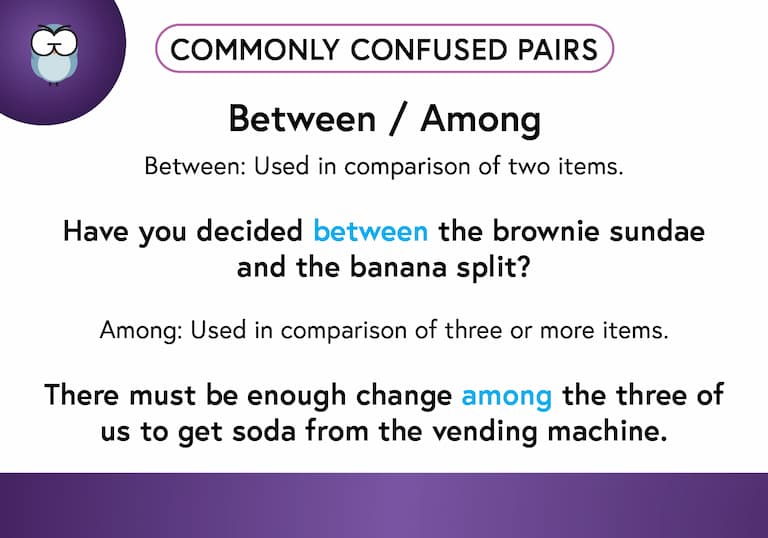
Commonly Confused Pairs
Some pairs of words may not be exact homophones but are still easily mixed up if they have similar pronunciations, spellings, and/or meanings.
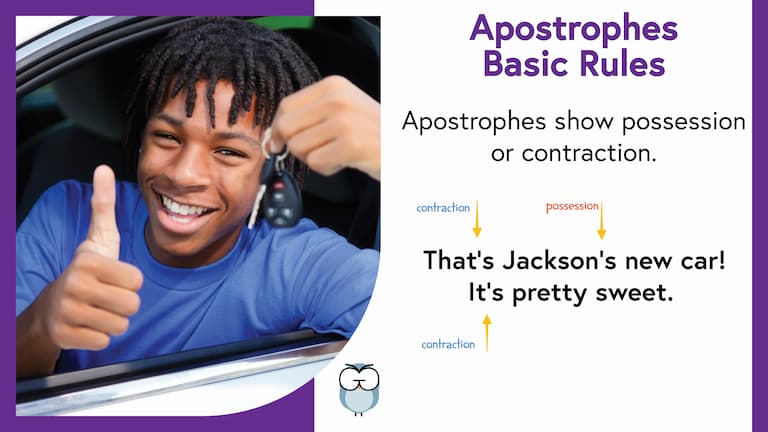
Apostrophes: Basic Rules
Apostrophes are punctuation marks that are primarily used to show possession and to indicate missing letters in a contracted word.
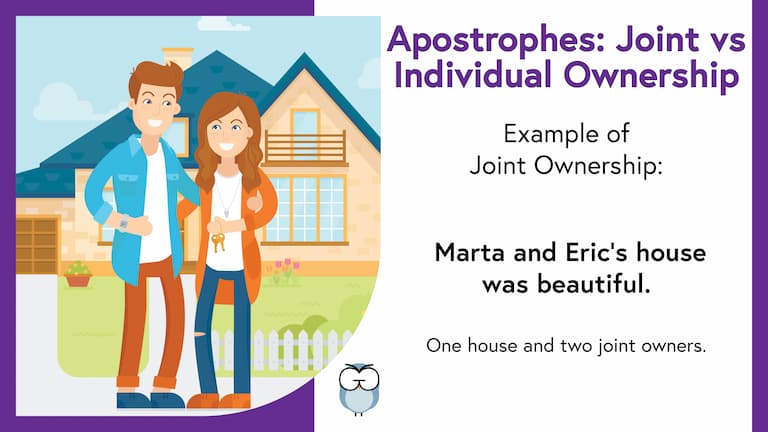
Apostrophes: Individual vs. Joint Possession
When a compound subject shows possession, the two or more subjects can have either joint or individual ownership of the object.
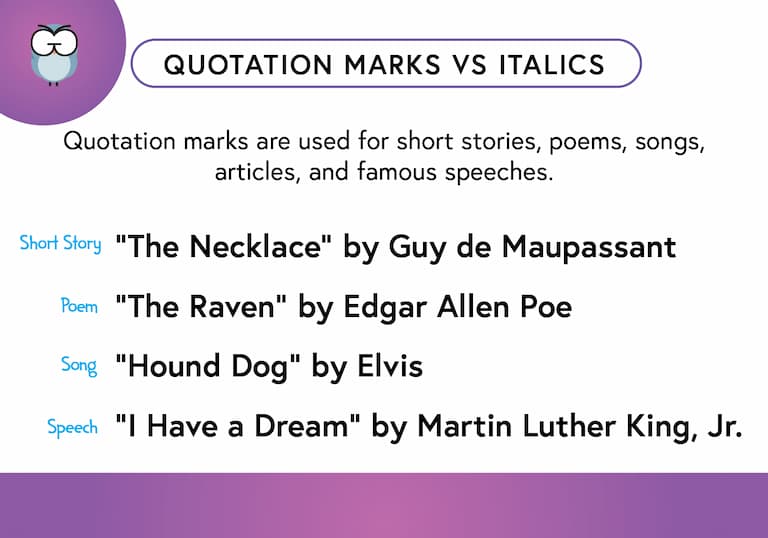
Quotation Marks vs. Italics
Quotation marks, a type of punctuation mark, are used to set apart titles of shorter works. Italics, a typesetting in which letters slant to the right, are used to set apart titles of longer works.
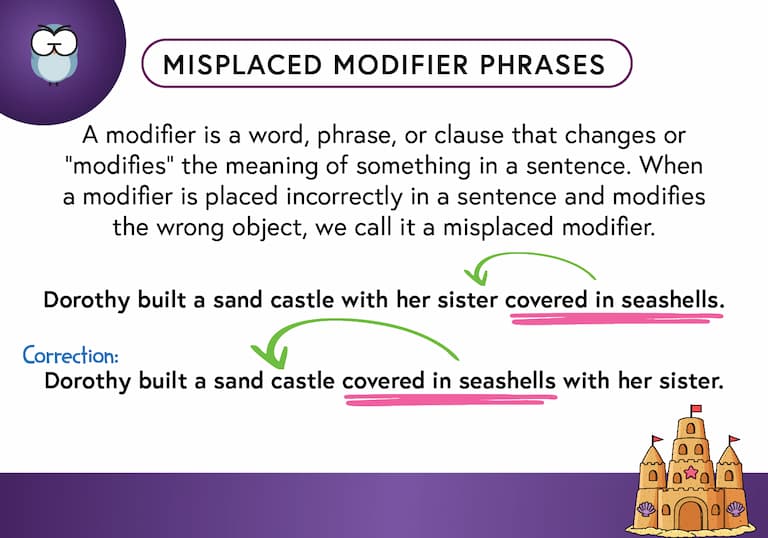
Misplaced Modifiers (Phrases)
When a modifier is placed incorrectly in a sentence and modifies the wrong object, we call it a misplaced modifier.
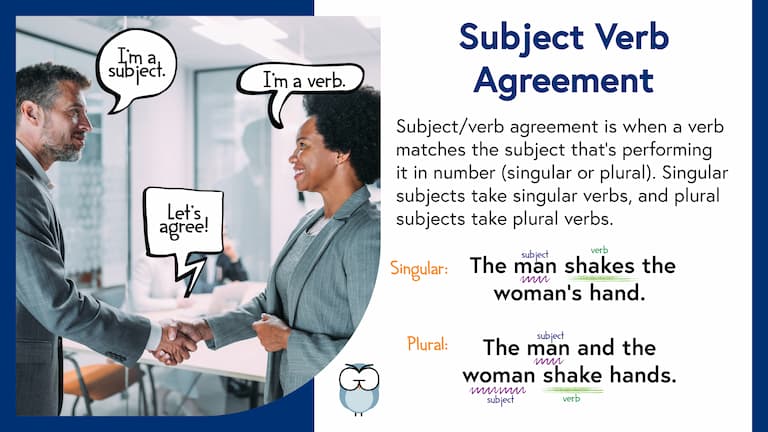
Subject/Verb Agreement
Subject/verb agreement occurs when a verb matches up to the subject performing it in number (singular or plural).
Dashes
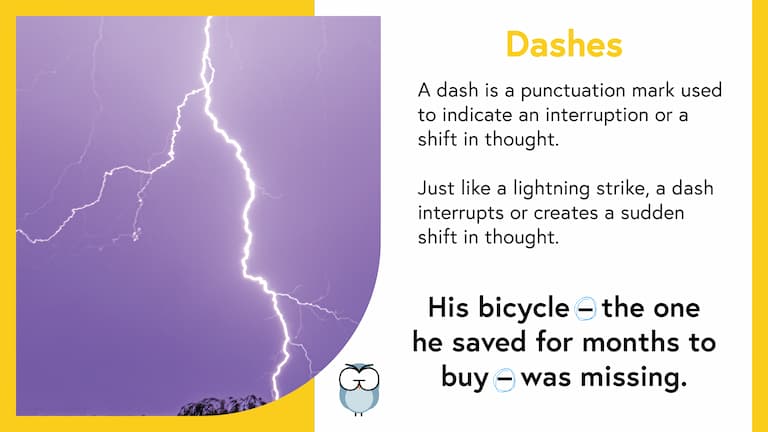
A dash is a punctuation mark used to indicate an interruption or a shift in thought.
Parentheses
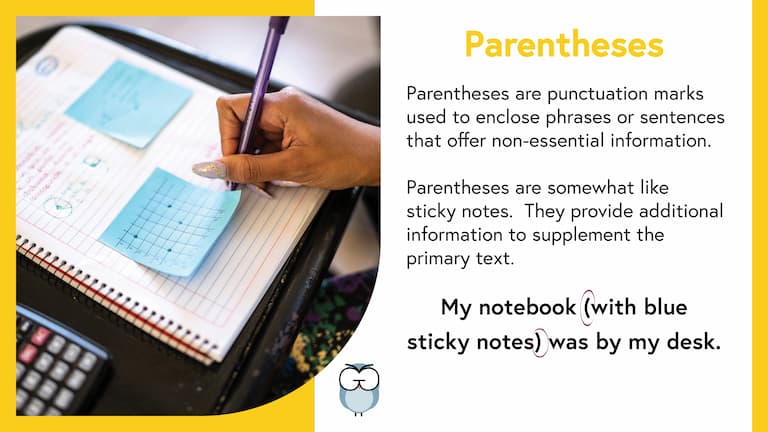
Parentheses are punctuation marks used to enclose phrases or sentences that offer non-essential information.
Semicolons with Independent Clauses
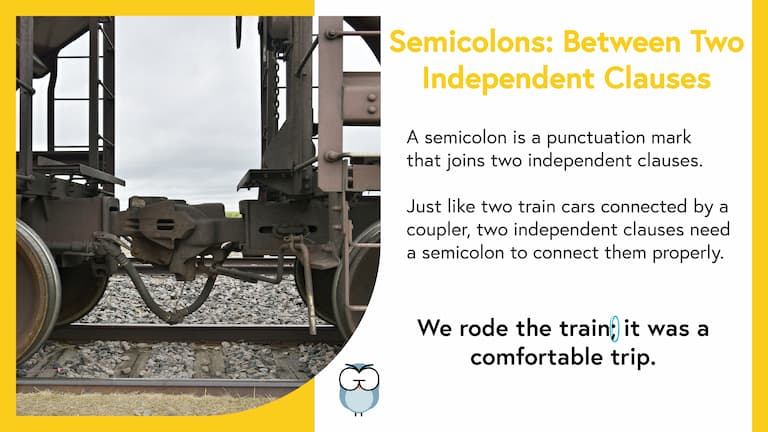
A semicolon is a punctuation mark that joins two independent clauses or separates items in a series that already contain commas.
Commas with Introductory Clauses
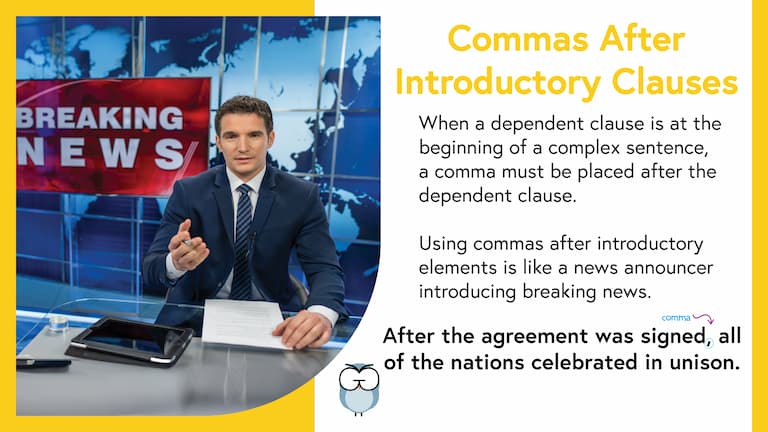
When a dependent clause is at the beginning of a complex sentence, a comma must be placed after the dependent clause.
Comma Splices
A comma splice occurs when two or more complete sentences are improperly joined with only a comma.
Sentence Fragments
A sentence fragment is a group of words that does not express a complete thought.
Parallel Construction
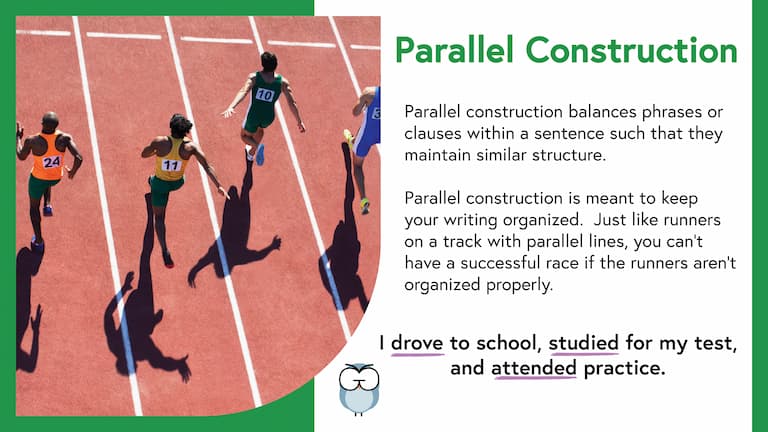
Parallel construction involves balancing phrases or clauses within a sentence such that they maintain similar structure.
Elliptical Clauses
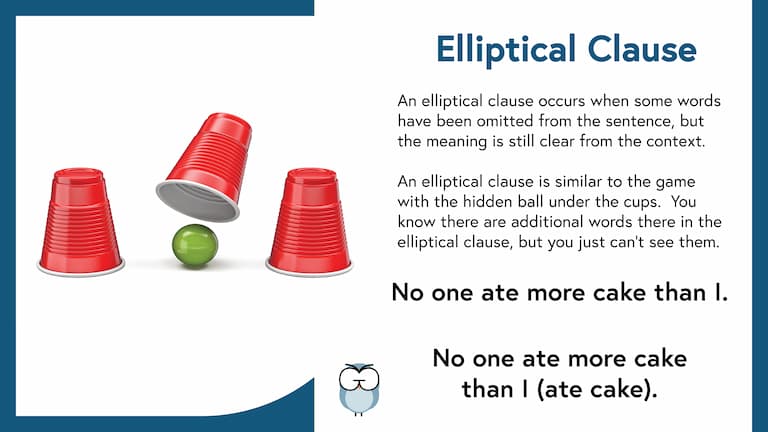
An elliptical clause is a type of dependent or subordinate clause in which some words have been omitted, but the meaning is still clear from the context.
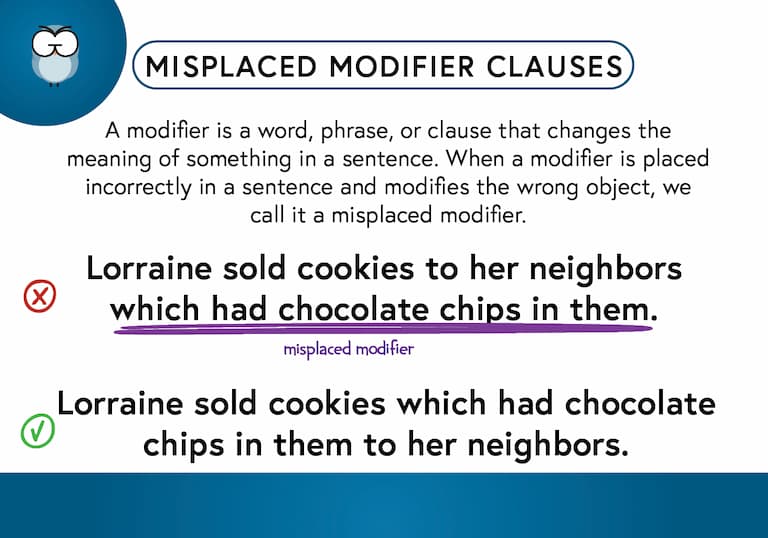
Misplaced Modifiers (Clauses)
When a modifier is placed incorrectly in a sentence and modifies the wrong object, we call it a misplaced modifier.
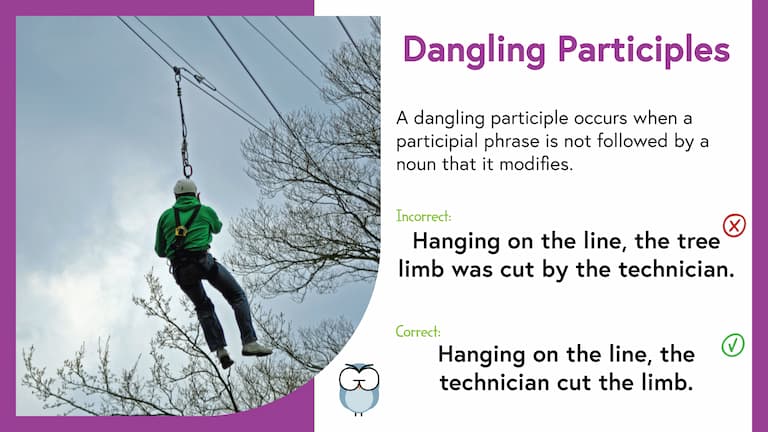
Dangling Participles
A dangling participle occurs when a participial phrase is not followed by a noun that it can modify.
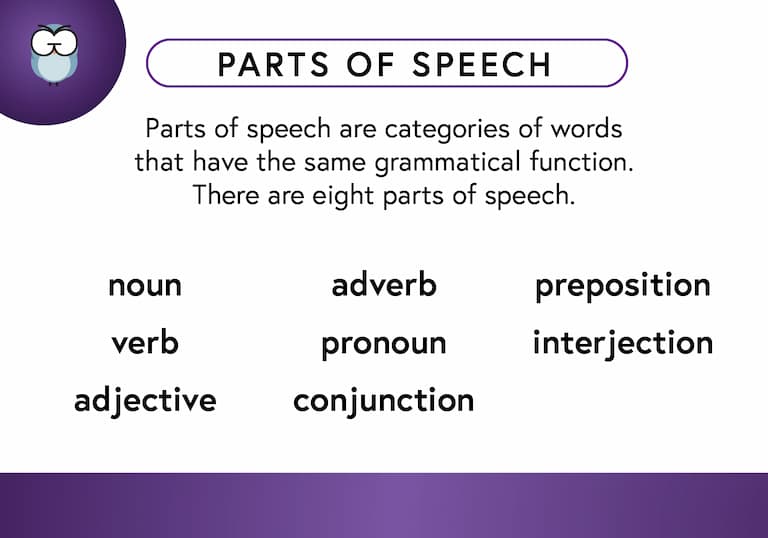
Parts of Speech vs. Parts of Sentences
A part of speech is a specific category that is assigned to a set of words that have the same grammatical function. A part of a sentence can consist of one or more parts of speech to construct additional components of language.
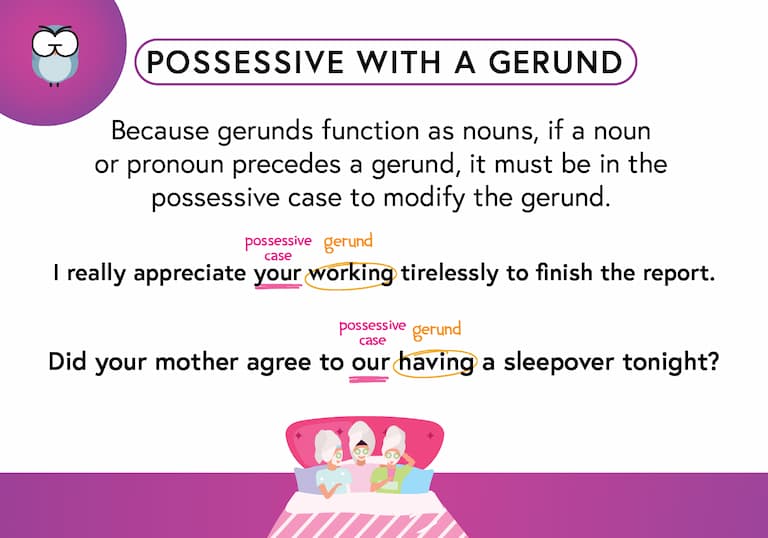
Possessive Use with Gerunds
Because gerunds function as nouns, if a noun or pronoun precedes a gerund, it must be in the possessive case to modify the gerund.
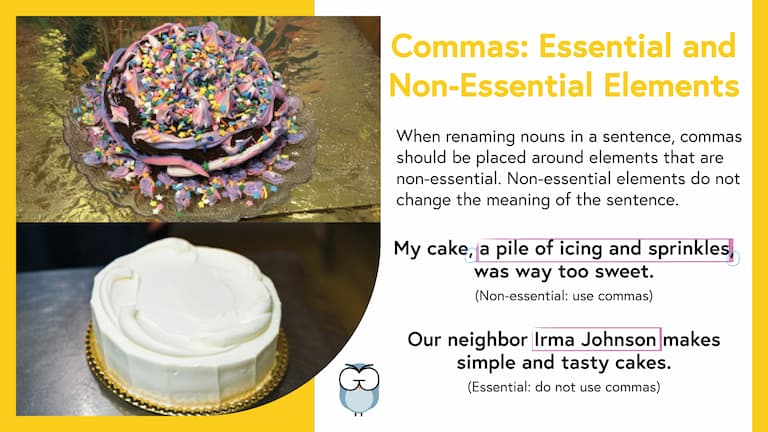
Commas: Essential and Non-Essential Elements
When adding words or phrases that rename nouns in the sentence, commas only need to be placed around elements that are non-essential, or elements that do not change the meaning of the sentence.